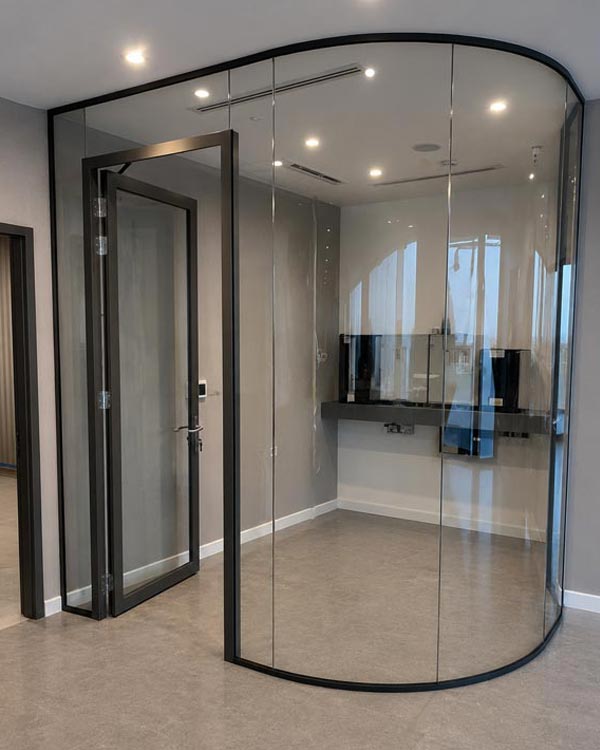
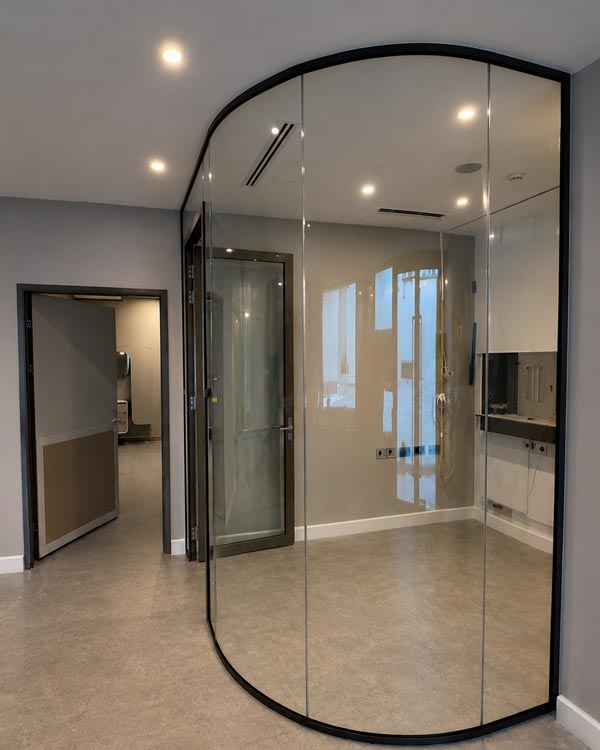
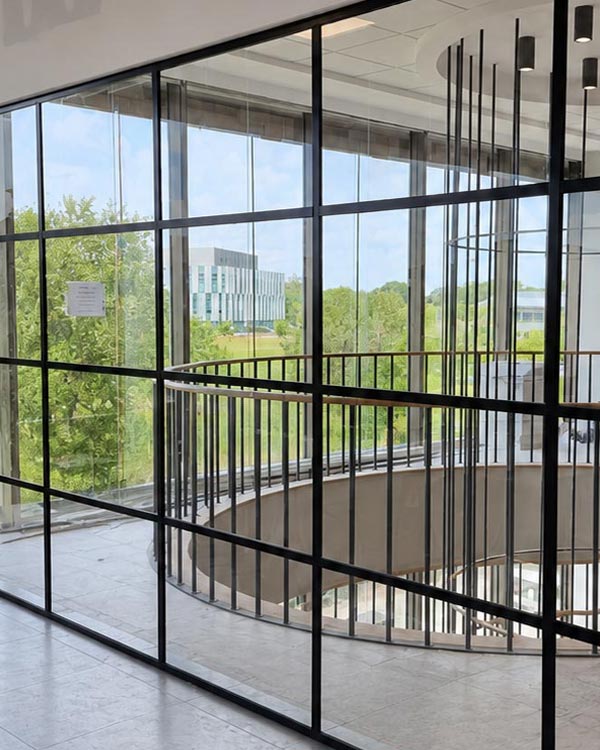
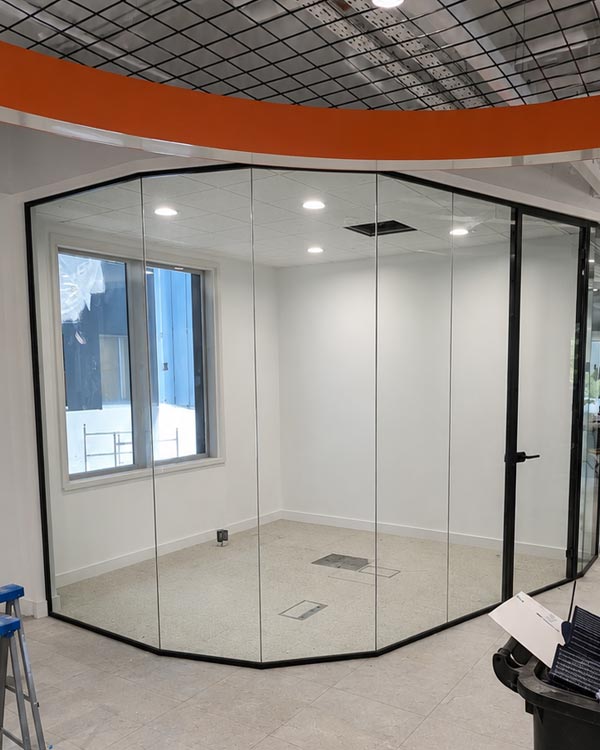
Curved glass room dividers are ideal where straight lines do not suit the layout or design. The glass is heated and shaped to a precise radius, creating bespoke partitions that fit perfectly into the space and work particularly well in reception areas and high-specification residential interiors.
Key features….

A Unique Finish
Curved glass introduces movement and fluidity into an interior. In reception areas, feature spaces and high-end residential projects, the modern-looking form creates an architectural detail that straight-line systems can’t replicate.

Spaces That Flow
Removing sharp angles actually changes how a room feels, which is why curved partitions work particularly well in open-plan offices and hospitality environments where layout and circulation are almost always part of the design brief.

Precise Manufacturing
Our experts make every curved glass partition to the project’s specific radius and dimensions. The glass is bent to fit precisely — there is no standard size to work around.
System Options and Variations
Our team can install curved glass room dividers as full-height glass walls, partial feature partitions or as part of a wider glazing scheme that combines curved and straight elements. Where that combination is needed, curved partitions can be specified alongside single glazed or double glazed systems, keeping framing and finish consistent throughout.
Single and double glazed configurations are available depending on acoustic or thermal requirements. You can also add switchable privacy glass within the curved framing, where visibility control is part of the brief.
Bespoke Glass Partitions Applications
Reception areas and entrance spaces are the most common commercial uses for curved glass partitions. The curved form creates an immediate visual impact at the point where first impressions count and it also holds up well in larger corporate and hospitality environments.
In residential projects, curved partitions tend to be specified in high specification homes where the partition is as much an architectural feature as a functional division. Bespoke curved glass room dividers and soft transitions between open plan areas are the most common use cases.
Retail and hospitality environments use curved glazing to direct movement and naturally define zones. The shape draws the eye and guides customers through the space without the need for signage or solid walls.
Finishes and Design Enhancements
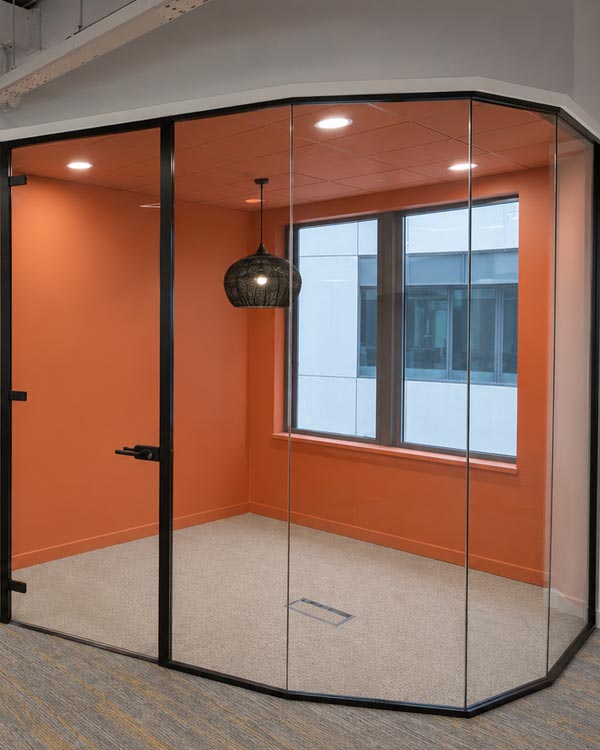
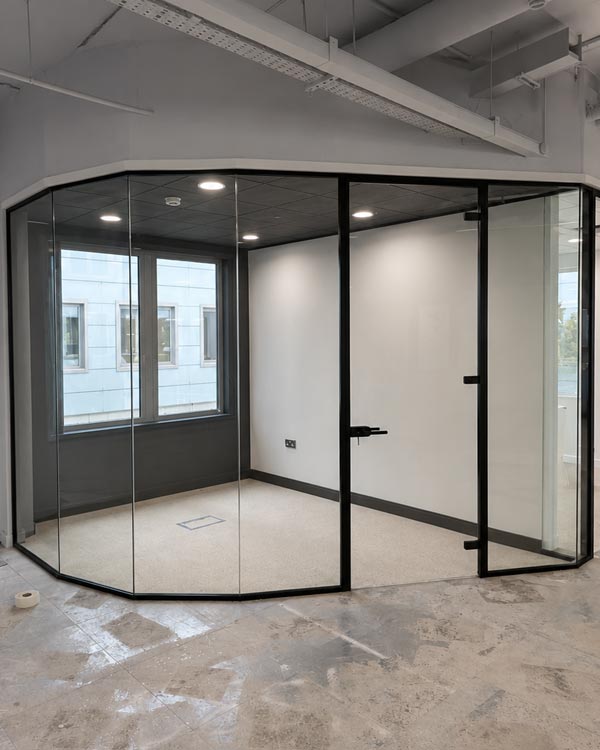
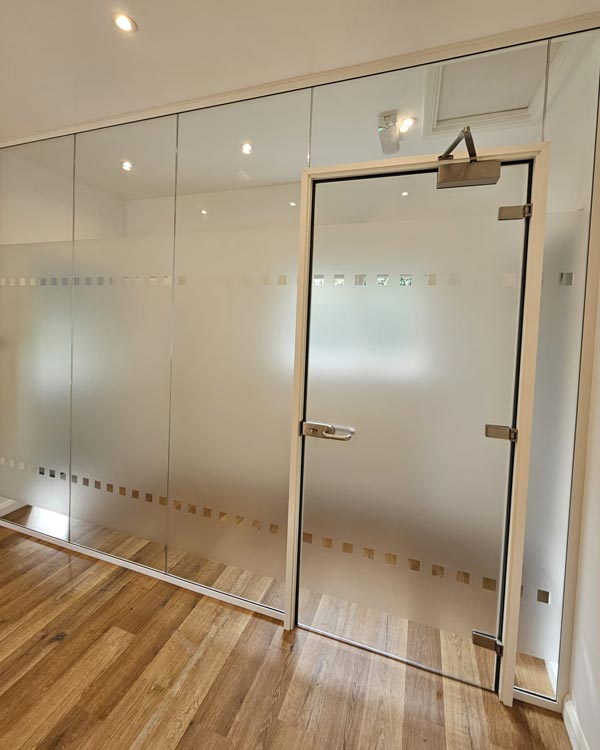
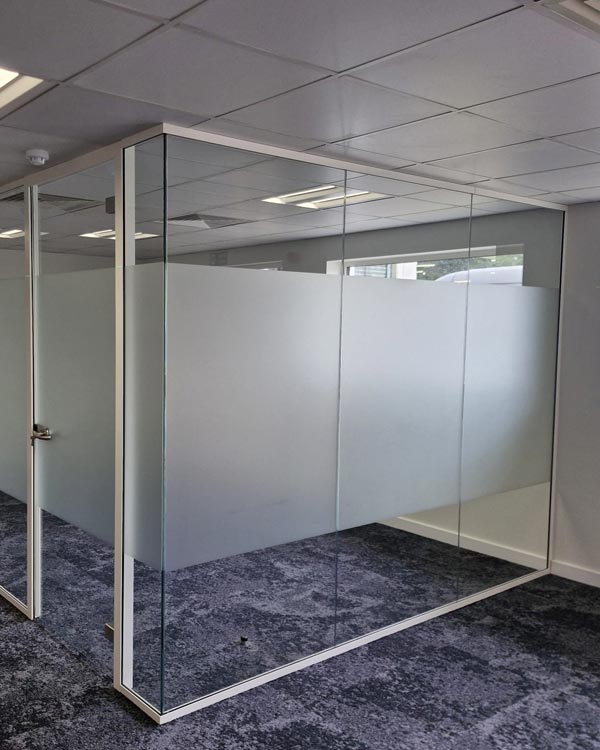
We can apply glass manifestations to give subtle privacy without disrupting the glazed surface. Decorative finishes and branding elements can also be incorporated, as can switchable privacy glass for instant transparency control.
Given the bespoke nature of these systems, finish decisions are worked through at the design stage.
Frequently Ask Questions
What are curved glass partitions used for?
Commercial reception areas, feature room dividers, hospitality interiors, open-plan offices and high-specification residential projects are the most common applications.
How is curved glass manufactured?
The glass is heated until malleable and shaped over a mould to achieve the required radius. We make each panel specific to to the project’s dimensions.
Are curved glass partitions more expensive than standard systems?
Yes. The bespoke manufacturing process makes them a premium specification and costs reflect that.
Can curved partitions be double glazed?
Yes. Double glazed configurations are available where acoustic or thermal performance is required alongside the design intent.
Do they provide sound insulation?
Acoustic performance depends on the specification. Enhanced sound reduction can be achieved by incorporating acoustic glass within the curved system.
Are they suitable for residential use?
Yes, particularly in high specification homes where the partition forms part of the architectural design rather than a straightforward room division.
Can doors be integrated?
Yes. Straight door sections can be incorporated, depending on the design and how the space needs to function.
How long does installation take?
Longer than standard systems. The bespoke manufacturing process affects lead times and this should be factored in at the project planning stage.