Glass Partition Safety – What Happens If the Glass Breaks?
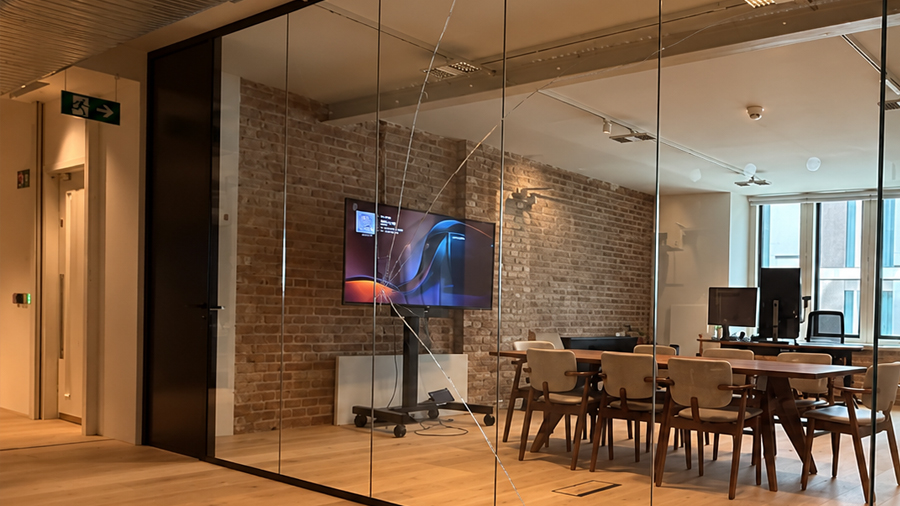
Floor-to-ceiling glass partitions are popular in offices but large glass panels separating rooms obviously raise safety concerns. If someone accidentally walks into a partition or the glass takes a heavy impact, how likely is it to break? And what happens if it does?
So, how safe are glass partitions and what protection do they offer? This article looks at what happens when commercial partition glass breaks and the safety standards that apply to glass walls in UK workplaces.
What Stops Partition Glass From Shattering Dangerously?
Glass partitions use safety glass to reduce the risk of serious injury if a panel breaks. Toughened glass undergoes heat treatment so it breaks into small, blunt-edged fragments instead of large, sharp shards. Laminated glass contains a plastic interlayer that holds the broken pieces together, helping the pane stay in place after an impact.
Toughened vs Laminated Glass for Office Partitions
Toughened Safety Glass
Toughened glass is around four to five times stronger than ordinary glass of the same thickness.
During manufacturing, it’s heated to a high temperature, then cooled rapidly to increase its strength.
You’ll find toughened glass in frameless office partitions and glass doors because it can withstand accidental knocks, but it’s still possible to break it with enough force. Bear in mind that damage to an exposed edge can also cause the whole pane to shatter.
Laminated Safety Glass
Laminated glass has a plastic interlayer, usually PVB, bonded between two or more sheets of glass and the fragments generally remain attached to the interlayer if one sheet breaks.
This type of commercial glass partition can be particularly useful where a broken panel needs to remain in place until it’s replaced. Laminated glass is also available with acoustic interlayers that reduce noise between meeting rooms and adjoining offices.
What About Fire-Rated Glass Partitions?
Fire-rated glass partitions have additional requirements. They use specially tested glazing and framing systems designed to resist fire for a specified period, commonly 30 or 60 minutes, depending on the system.
Professional glass partition installers will be able to provide fire-rated and acoustic options.
Fire-rated partitions must be specified and installed as a complete tested system to achieve their intended fire performance.
When Glass Partitions Break
Even safety glass can break if it’s struck with enough force. But what happens when it smashes depends on the glass type and how the partition was built.
With toughened glass, the entire pane can shatter at once.
Fragments from toughened glass partitions are much smaller than those from ordinary glass, reducing the likelihood of deep cuts. However, the glass can fall out of the partition, leaving an exposed opening. The fragments can still cause injuries, so keep the area clear until they’re removed.
A heavy impact on laminated glass walls might leave a web of cracks across the panel, but the plastic interlayer usually holds the broken pieces together.
The partition might still be standing, but it will need assessment and replacement as quickly as possible.
If a commercial glass partition breaks in your workplace, keep people away from the damaged area and arrange for a professional glass wall installer to inspect it.
Safety Glazing Requirements for Glass Partitions
In England, Approved Document K of the Building Regulations covers glazing in areas where people risk walking into glass or being injured if it breaks.
For internal glass partitions, these areas are called critical locations. They include:
✓ Glass doors where glazing is within 1,500 mm of floor level.
✓ Glazed panels beside doors where the glass is within 300 mm of the door edge and 1,500 mm of floor level.
✓ Other glazed walls and partitions where the glass is within 800 mm of floor level.
Glazing in these locations must meet the relevant safety requirements. Depending on the circumstances, this can involve using impact-resistant safety glass that has been tested and classified under BS EN 12600.
There are also some rules covering how clearly large glass panels can be seen.
A full-height partition might meet impact-safety requirements but still need visible markings to help prevent people from walking into it.
Making Glass Partitions Visible to Prevent Collisions
One risk with floor-to-ceiling glass walls is that some people don’t notice them and mistake a clear panel for an open doorway.
This is why you’ll often see frosted bands, company logos or other markings across office glass walls.
These markings on glass walls are known as glass manifestation. As mentioned earlier, under Approved Document K in England, large areas of transparent glazing should generally have visible markings at two heights:
- 850–1,000 mm above floor level
- 1,400–1,600 mm above floor level
The markings do need to stand out against the background and remain visible from both sides of the glass. For example, a frosted design that looks clear against a pale wall might be difficult to see in certain lighting conditions.
You can incorporate glass manifestation into your partition design using frosted film, decorative graphics or contrasting bands. This makes the glass easier for staff and visitors to see while maintaining the modern appearance and natural light that make glass partitions so appealing in the first place.
Why Correct Installation Matters for Glass Partition Safety
Even the right safety glass needs proper support. Large glass panels are heavy, so the frames, channels and fixings must suit the size and weight of the glazing.
Glass doors also need the correct hinges and fittings to prevent excessive movement or pressure on the glass. That’s because poorly fitted hinges and other components can loosen or wear with repeated use, affecting how securely the glass door is supported.
Once they’re professionally installed, check glass partitions for signs of damage. A professional should inspect loose fittings, chipped glass edges or panels that have started to move within their frames as soon as possible to prevent further damage and reduce the risk of injury to staff and visitors.
Keeping Glass Walls Safe in the Workplace
Commercial glass partitions should withstand everyday use, but their safety depends on choosing suitable glazing and installing the entire system correctly.
If you’re planning new glass partitions for an office or commercial building, check that the proposed system meets the relevant safety glazing requirements and also inspect existing partitions if the glass is damaged or fittings start to loosen.
Before installation, it’s also useful to understand whether you need planning permission for internal glass partitions, as the requirements can vary depending on the building and the work involved.
With the right glass and professional installation, you can enjoy the benefits of a modern, open-plan feel while creating separate spaces that still allow plenty of natural light through and help people feel connected across the workplace.